Sony Nifty-Fifty

Explore More
 ■ Sony Camera
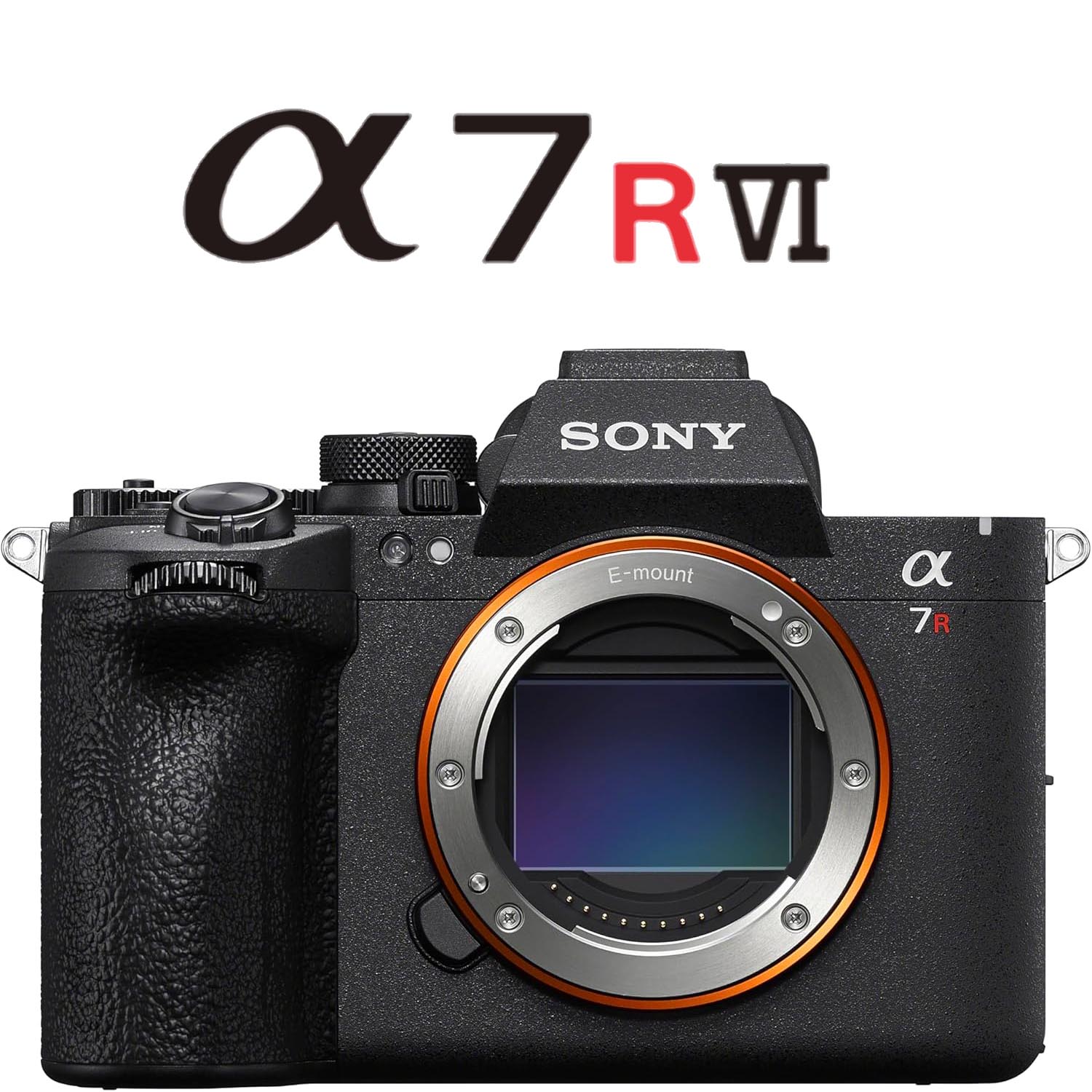
Everyone who shoots Sony is talking about getting the upcoming Sony Alpha 7R VI. This R-Line series is meant for higher resolution at full-frame and is said to be a “A9II killer” because of its incredible fast readout speed (fully-stacked sensor with a BIONZ XR2 chip) and high-speed 30-frames a second (zero blackout) shooting.
Sony SEL50F18
I first got my Nifty-Fifty lens (50mm) around the same time that I bought my Sony A6000 camera in 2016. If you own a Sony lens camera, you should own this lens – especially because this is an affordable full frame lens for $250 (you can get it on sale right now for $200) – and best of all, the F-Stop is 1.8. You read that right. F1.8.
For the price, it’s a fantastic deal. However, there are some downsides to the lens – so I will address the problems. For one, the older focus mechanism is very, very loud. You can literally hear it move. When you film something, the microphone will record the loud lens. So, what that it’s loud? Well, the problem is if you’re shooting a quiet sit-down show, people will hear you. The older mechanism also takes a long time to focus, but you can offset that with more modern Sony camera body that has better, faster focus. At night, the lens often has problem finding the subject and focusing. It’s just older tech.
This is a full-frame lens, so you would want to use it on a full-frame camera. Unfortunately, at the time that I purchased it, my A6000 is an APS-C and did not take the full benefit of the SEL50F18. I’m basically not seeing 40% of the full frame, and that also means that the lens is really an 80mm.
There is also no lens stabilization, so if you suffer from shaky hands … you need a Sony camera that has image stabilization in the camera’s body. I think most modern bodies should have some sort of stabilization, but check your camera to be sure. I know when I was using it on the A6000, I hated the lens because sometime it would produce shaky images (especially at night).
Lastly, to keep the cost down, the lens is made of plastic and is not weather sealed. You cannot (or should not) shoot in the rain. I don’t mind the plastic, but I think it wears down faster than metal parts. At least it’s lighter, right?
Look, for $250, this is a walking around daytime lens and great for taking people’s portraits. It’s a prime lens, so you don’t have to worry about adjusting the lens – just point and shoot. I will have to add that the lens is not as sharp as a G-Master lens (nothing is!), but it’s good enough. It’s on par with my Sigma lens. It’s sharp in the center and then is soft as you go to the edges.
I was just very deeply impressed that it’s a F1.8. When I was using it, I wasn’t used to 1.8, so it opened up an extra stop of light that I normally use. That was amazing, so shooting in a dark room, I can adjust the exposure in post-process and the photo is useable! Please see samples attached.
Also worth mentioning is that the focusing distance is pretty short, I think less than 20 inches… so you can get close to your subject, or if you’re in a tight space and can’t move around. I only mention this because someone who gave the lens a five-star rating said that she was using a larger lens for portraits and she had to always be far away from her subject. With the nifty-fifty, she can shoot at a comfortable distance.
Even though another use complained that there is no manual/autofocus switch, it’s easy to overlook the flaw when the lens is decently priced. I never even thought about it, as I only have the camera always in autofocus. But I can see why you would want a manual mode, as sometimes you don’t want what the camera focuses on – for example a spider web or a bird hidden behind leaves. However, I wouldn’t use this nifty-fifty lens for wildlife photography… this lens really wasn’t designed for that kind of activity. It’s really a portrait lens, and maybe pet lens.
Like I said earlier, if you own a Sony camera, you should get this lens. If you have a Sony APS-C camera, you can still use it, but I recommend using on a Full Frame.




EISA Award: Tamron 35-100mm F/2.8 Di III VXD
Tamron
Japanese camera lens maker Tamron has been in the news lately, having recently announced that they won two EISA awards for their lens: 16-30mm F/2.8 Di III VXD G2 (Model A064) and 35-100mm F/2.8 Di III VXD (Model A078). I am missing the 28-70mm range (I need it to be F2.8 or lower for low-light) so I did consider the Tamron 35-100mm as a possible option in my camera bag.
Here’s what EISA had to say about the 35-100mm:
The TAMRON 35-100mm F/2.8 Di III VXD (Model A078) is a compact standard zoom lens designed for full-frame Sony E-mount and Nikon Z mount mirrorless cameras. It covers the focal lengths that are most commonly used in portrait photography, 35mm, 50mm, 85mm, and 100mm, while maintaining a relatively fast F2.8 aperture throughout. The VXD (Voice-coil eXtreme-torque Drive) linear motor focus mechanism operates extremely effectively, supporting Hybrid AF and Eye AF systems. The lens has a very high resolution at both the centre and edges of the frame, while delivering beautifully smooth bokeh. Other practical features include Moisture-Resistant Construction and a USB Type-C Connector Port which allows for customization and firmware updates via the TAMRON Lens Utility application.
Also, according to Reuters, Sony has been trying to buy Japanese camera lens maker Tamron for $1.22 billion USD.
I own one Tamron (28-200mm F2.8-5.6 Di III RXD), and while the plastic and hardware look cheap, it is a well designed and performing lens. Not as sharp as I would like, and once it leaves 28mm, the lens becomes a higher F-stop, like F3 and F4… which doesn’t bode well for concert shooting.
Anyway, I don’t think it will be a good thing if Sony ends up owning Tamron, because I can already see that they’ll raise their prices due to lack of competition… Plus it would also mean that only will likely stop producing lens for their competition, such as Nikon or Canon.
The only positive outcome I can see is that Sony can incorporate Tamron’s tech into Sony native lens. Maybe even introduce more range and different options? I hope they can lower their prices, but I doubt it.
My current lens that I am using are:

Sony 70-200mm G-Master Lens is the size of a Subway sandwich
- Sigma 16-28mm F2.8 DG DN Lens: This is a $1,000 lens that is really wide. You can capture a group of people in a cramp space. Overall sharpness and clarity are not as good as Sony. I don’t really like using this lens because the image quality just doesn’t look good. It also always look much darker when I take photos. I am only speaking from the “Contemporary” lens, as I know Sigma makes a more expensive lens under their “Art” line (which are heavier, has complex glass for the best image quality). It maxes out at 28mm which is not far enough reach…
- Sony SEL50F18: A 50mm F1.8 prime lens that is amazingly priced at $250. A good portrait lens, but suffers from and older and louder focusing mechanism (making the lens useless when using it to film videos). Plus, its plastic body and cheap enclosure is no good for bad weather.
- Sony FE 70-200mm f/2.8 GM OSS: This $2,000 lens (the first version) rarely comes off my camera, because the range (70-200mm) is really useful to me. At 70mm, it’s somewhat of a portrait… and at 200mm is great at the back of a concert venue. The only complaint is that the lens is massive (it’s nearly 12 inches when you put the lens hood on!) and you can’t use it in tight area. That is why I needed that 16-28mm in my bag.
For a long time, I did consider getting a lens that fills in that missing gap of 24-70mm, but I never got around to it. If I were to get one right now, it would be the Tamron, because it is currently on sale for $700…. Or perhaps the recent awarded 35-100mm F/2.8 Di III VXD ($900) is a good option.
Read more Technology (Sony).
